
Every candidate interaction matters, from the moment a potential hire discovers your company to the day they step into their new role. Job seekers are becoming increasingly discerning and their perceptions of your recruitment process can significantly impact your ability to attract and engage top talent.
This article delves into the latest candidate experience statistics, offering valuable insights into the experiences and expectations of today’s job seekers.
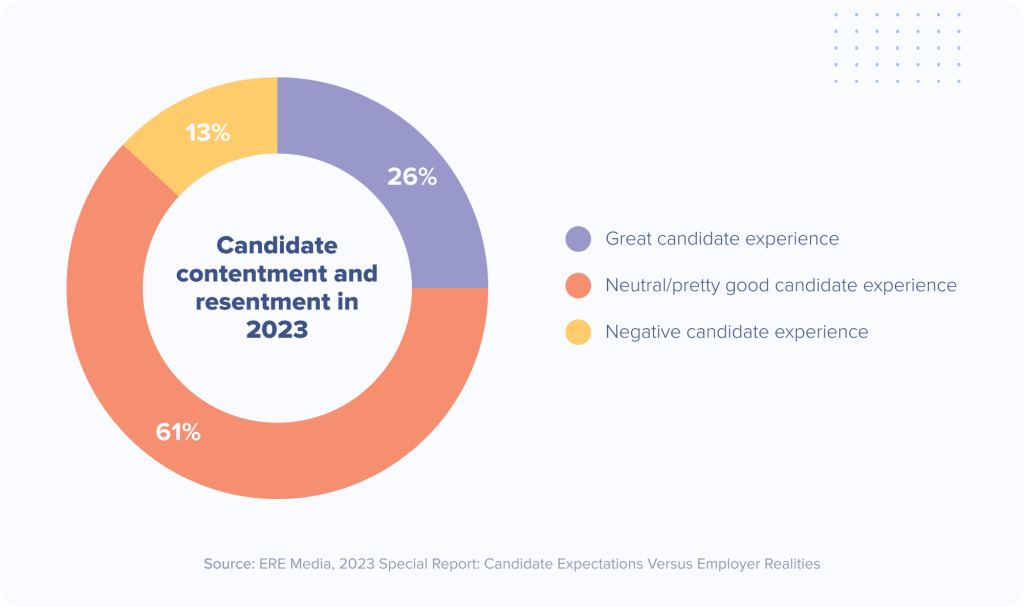
1 in 4 of candidates are satisfied with the talent acquisition process
Only 26% of North American job seekers say they had a great candidate experience. And worse, 13% of candidates had such a terrible candidate experience that they’re less likely to apply again, refer others, have any brand affinity, and make purchases from the company. This can have long-term effects on your ability to attract and engage talent — and may impact your ability to survive as a business.
65% of candidates don’t receive consistent communication
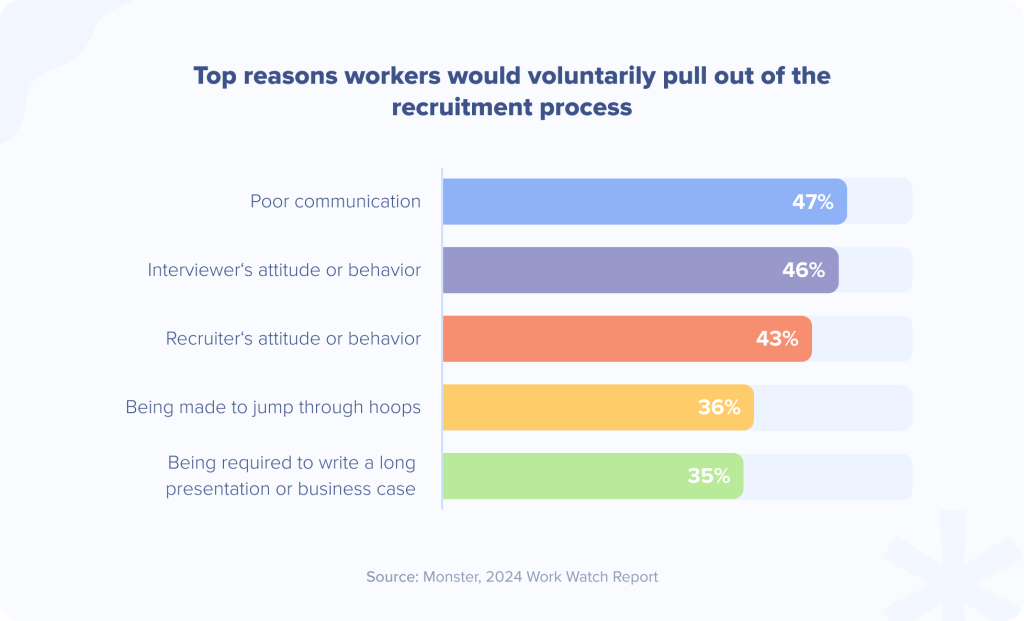
Poor communication is one of job seekers’ biggest complaints during the recruitment process — and for good reason. Two in three candidates (65%) haven’t received consistent communication through the recruitment process.
For example:
Nearly half of candidates (47%) said poor communication would cause them to withdraw from the recruitment process. This includes not being updated on their application status or their messages not being responded to quickly, if at all.
48% of employers are prioritizing the candidate experience
The benefits of a positive candidate experience are clear and forward-thinking talent acquisition teams know that it’s worth the investment. Improving the candidate experience is a strategic priority for 48% of employers, ranking only behind improving quality of hire.
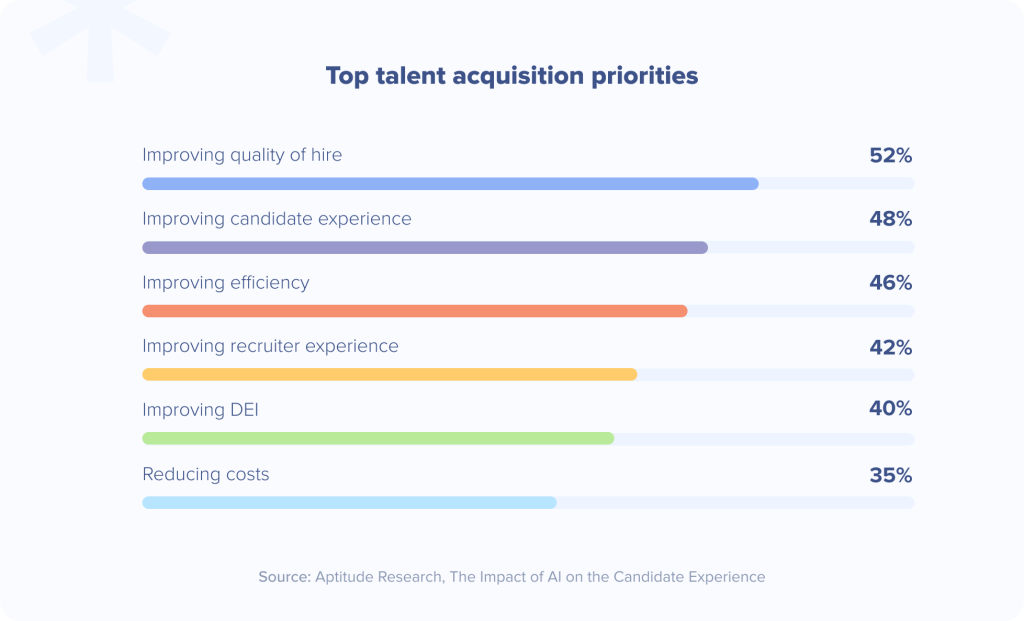
Improving your candidate experience can have a direct impact on many areas of your talent acquisition program — including quality of hire and efficiency.
A positive candidate experience can help you attract skilled talent and keep candidates engaged in your recruitment process so you can hire more of your top choice candidates. Increasing your offer acceptance rate and decreasing candidate churn also enables your talent acquisition team to hire more efficiently.
Almost 9 in 10 employers (89%) say it’s a problem when job seekers drop out of job searches or don’t show up for the first day, citing a variety of reasons for these frustrations. For example, 38% of employers say the time invested in a job candidate could’ve been used productively elsewhere.
1 in 2 companies haven’t tried to improve their candidate experience
Despite the importance of candidate experience, only half of companies have tried to make improvements.
Perhaps it’s because they don’t know where to start. Only 11% of organizations track candidate satisfaction and just 21% of candidates have been surveyed about their satisfaction with the hiring process.
Tracking key metrics and gathering candidate feedback are the best ways to identify opportunities for improvement, get buy-in for candidate experience programs, and measure your progress.
11%
of organizations track candidate satisfaction
21%
have been surveyed about their satisfaction with the hiring process.
74% of candidates want pay transparency
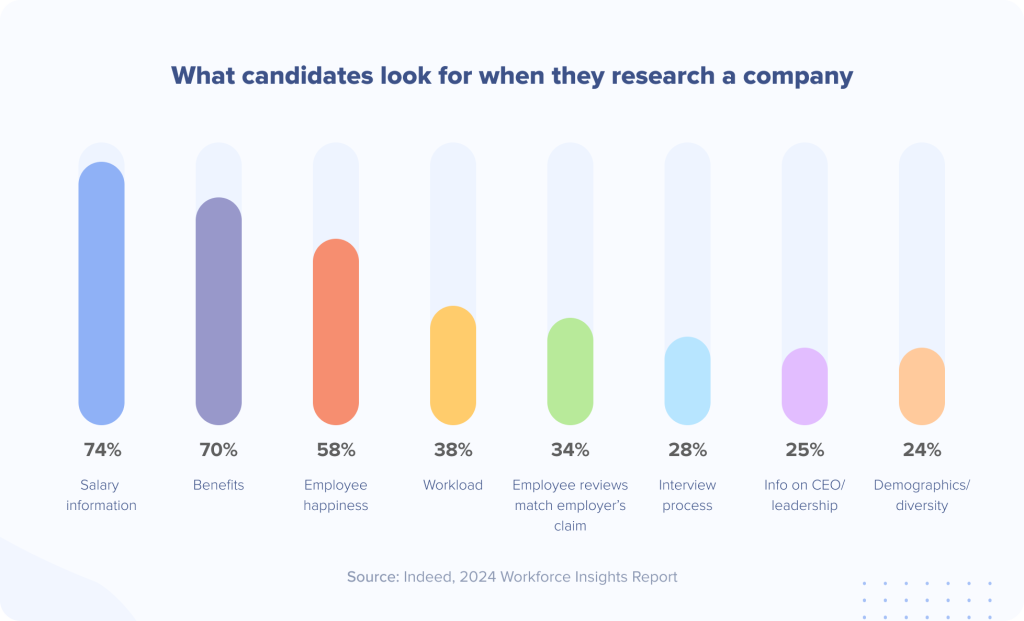
Over half of job seekers (54%) say they typically research every company before applying. Company career sites are often the first stop, with 39% of candidates citing career sites as the most valuable research channel. This is followed by online groups, such as those found on Facebook and LinkedIn, and employer review sites.
The vast majority of candidates are looking for salary information (74%) and benefits (70%). They also want to know what it’s like to work at your company, what your interview process looks like, and if they’d feel a sense of inclusion and belonging.
49% of job seekers agree that job applications are too long and complicated
Nearly half of job seekers (49%) agreed that most job application processes are too long and complicated. This could be hurting your conversion rate: 33% of workers said they’d abandon a job application if it was clumsy, repetitive, or not easy to fill out.
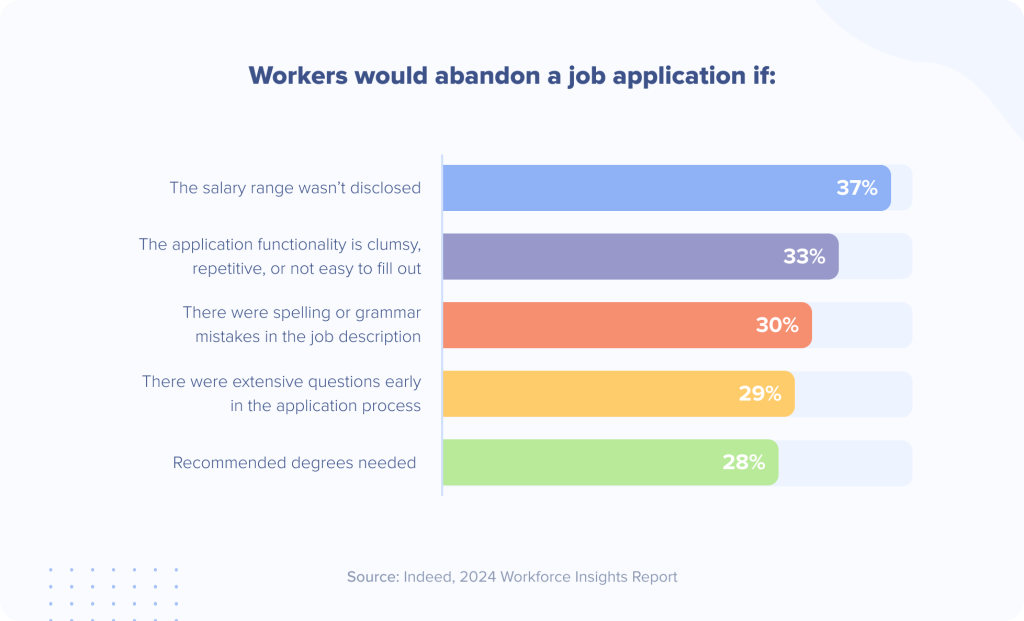
Streamline your application to ask only for essential information, enable candidates to apply using a resume or LinkedIn profile, and ensure your application process is mobile friendly. The application process takes 15 minutes or less to complete for 61% of candidates. Take the time to apply for a job on your own career site to find opportunities to reduce friction and speed up the process for your candidates.
53% of withdrawn candidates are pessimistic about speed
A long hiring process can be a turn-off for candidates. In fact, 53% of withdrawn candidates and 59% of rejected candidates are pessimistic about the speed of the recruitment process.
Your candidates may lose interest or accept job offers from other companies if they’re left waiting too long between stages or before getting an offer. Nearly a third of North American candidates (32%) that withdrew from the recruiting process said they accepted another offer from a different company.
The three most negative reasons North American candidates withdraw themselves from the recruiting process are:
Minimize the steps in your recruitment process and keep it moving to ensure the best candidate experience possible. Three in four workers (77%) said they typically hear back from employers within two weeks after their applications are submitted. However, 56% of employers with exceptional candidate experiences disposition candidates within 3–5 days. Speeding up your recruitment process is a great way to improve your candidate experience and close more of your top choice candidates.
70% of rejected candidates say receiving detailed feedback would leave them with a positive impression
Most candidates (83%) want to know as soon as possible when they’re no longer being considered for a job. And they’d like to know why: 70% said that receiving a clear reason for why they weren’t selected would leave them with a positive impression of the company. In fact, finalists who receive feedback are 30–50% more willing to refer others than those who don’t get feedback.
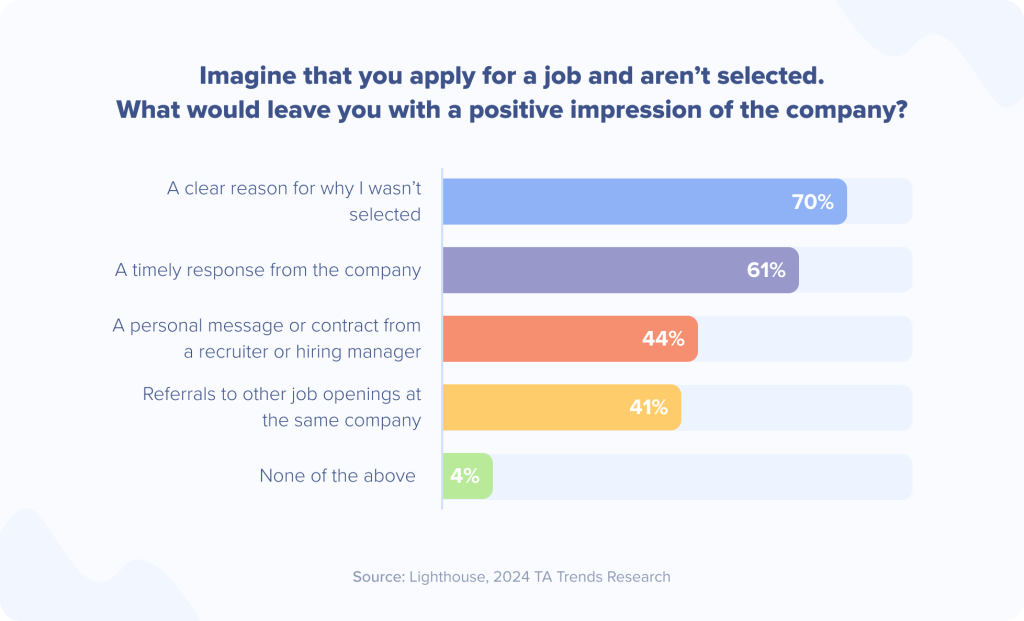
Let candidates know when they’re no longer being considered for your role and provide feedback as often as possible. As it stands, 65% of North American employers give feedback to internal candidates but only 17% give feedback to external and referred candidates. A personal, timely message with feedback is an impactful way to improve your candidate experience.
Good onboarding communication makes hired candidates 137% more willing to increase their relationship with your company
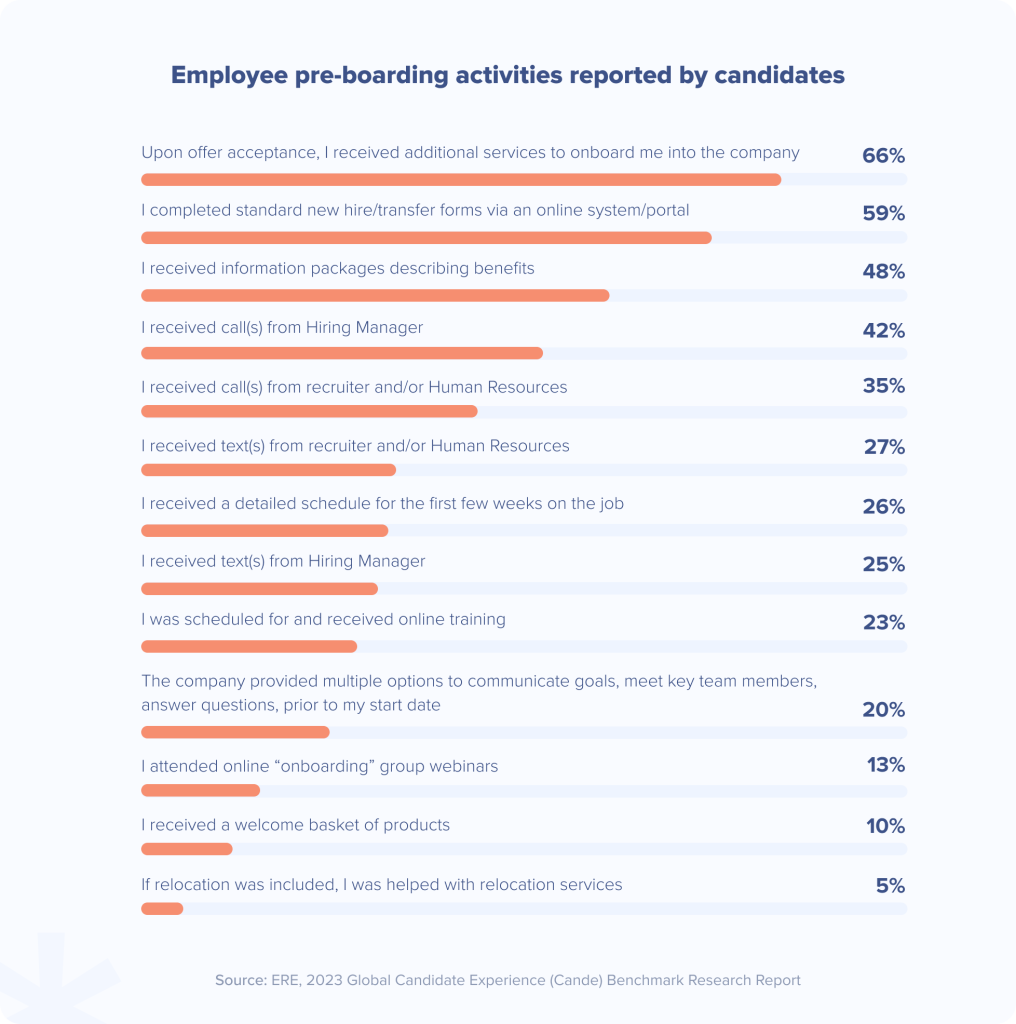
The candidate experience doesn’t end until your hired candidate shows up on their first day of work. Take time between the offer acceptance and the start date to welcome your new hire and prepare them for their first day.
Provide multiple options to communicate goals, meet key team members, and answer questions. This can increase your new hire’s willingness to refer others, have brand affinity, and make purchases from the company by 137% (compared to 110% for all hired candidates).
Other common pre-boarding activities that can improve the candidate experience include:
Companies with a positive candidate experience are 3x more likely to improve employee retention
A great candidate experience sets the stage for a positive employee experience that increases engagement. New hires who have a positive recruitment experience develop a sense of connection with your company and feel valued from the outset. This may translate to a happier, more loyal, and more productive workforce.
Aptitude Research found that companies with positive candidate experiences were:
An investment in the candidate experience is an investment in your future team — and in your organization. The benefits are far reaching, as improved satisfaction, retention, and performance can improve innovation, productivity, and profitability.
Final thoughts on these candidate experience statistics
Your candidates want more than just a job offer — they seek a seamless, respectful, and engaging recruitment process. Use these candidate experience statistics to motivate and inspire improvements to your recruitment process, but don’t overlook feedback from your job seekers and employees. Measuring your candidate experience is the best way to find specific areas for improvement so you can build a stronger recruitment process. A unique candidate experience can help you stand out from your competitors and win more skilled talent for your team.

Subscribe for updates
Get talent acquisition best practices, trends, and news delivered directly to your inbox.
By entering your email, you agree to receive marketing emails from JobScore
Want to learn how JobScore can help you elevate your candidate experience?