Seeing a great candidate drop out of the recruitment process is disappointing. You offer applicants all the answers and reassure them they’ll be a good fit — only for them to never show up on their first day at work.
Learning how to make a job offer that works against this new-hire ghosting will help you save both time and money.
For instance, you can look for early signs of ghosting, deliver offers in real time, and make your pre-boarding ghost-proof.
Read on to learn more about new-hire candidate ghosting and the actionable steps you can take at every stage of the recruitment process to reduce it.
What Is New-Hire Candidate Ghosting?
New-hire ghosting happens when a new hire never shows up for their first day, despite signing an offer or agreeing to work with your company.
There’s a decent chance it has happened to you. Studies show that 22% of candidates report accepting a job offer only to never show up for their first workday.
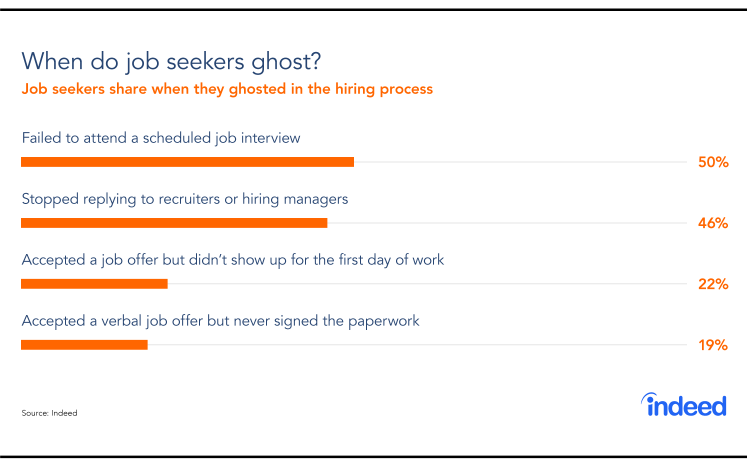
Source: Indeed
When the job market is hot for candidates, your new hires can afford to be much more particular — entertaining multiple offers at once and choosing the one they like best.
The trend is getting worse, too. Indeed surveyed 500 job seekers and found that 28% had ghosted a potential employer in 2020, up from only 18% in 2018.
But if you know how to make a job offer to the right candidate, you can address this issue at your company. Here’s what you can do at every stage of the recruitment process to reduce new-hire ghosting.
1
Analyze the Role
Some jobs are simply going to attract ghosters. Ask yourself these questions to assess whether a role is more likely to draw unreliable applicants:
2
Scrutinize the Resume
Before you bring a candidate in, look for these signs on their resume that they may be likely to ghost:
If you notice any of these signs, be on the lookout for other hints. Plan what to ask in the interview and get more detail on their job changes and their motivation for working at your company.
You can also look for positive signs. Compare the resume and cover letter against your job description and scan for evidence that they tailored their application. Did they use your keywords? Did they name the skill sets you need? If so, that’s a strong indicator they’re genuinely interested.
3
Look for Signs of Ghosting in the Interview
Many interviewers assume that a candidate showing up for an interview signals enough interest in the job — but that’s not always true.
When you interview someone, ask questions that assess their interest in the role and your company, and their likelihood to commit. For instance:
4
Inquire About Other Offers
Before you make an offer, get a sense of the other offers the applicant may have received. Check whether they’re interviewing elsewhere, since ghosting often happens when someone lands a better offer.
You can be certain they’ve applied to other companies — about 10–15 a week if they followed Indeed’s advice — but how many, how recently, and how far along those applications are will tell you how likely you are to land them.
5
Deliver Offers in Real Time
When you’re ready to make an offer, don’t send an email. Call your candidate to deliver it.
You’ll probably reach voicemail — but don’t leave the offer there either. Instead, ask the applicant to call you back when it’s convenient.
On a call you can gauge how excited the candidate is, which is much harder to read over email. Not every “yes” is created equal, and a conversation helps you judge how strong theirs really is. If possible, deliver the news over video for an extra dimension of assessment — calls have also been shown to build stronger bonds than written messages.
On your call, be sure to:
6
Take Pre-Boarding Seriously
You put a ton of effort into finding your candidate, and that work doesn’t stop once they accept your offer.
Building a genuine relationship with the new hire is the key to reducing ghosting. You can’t stop everyone from finding a better offer at the last minute, but a strong candidate experience makes them more likely to be honest with you than to no-show.
In other words, pre-boarding isn’t the time to go silent — it’s the time to show your new hires some love and get them excited to work with you before onboarding officially begins. Try:
Whatever you do, follow up with consistent communication to nurture the relationship.
7
Keep Up With the Competition
If, after all this, you still experience ghosting, you may need to be more realistic about your market and competition. There’s a good chance you simply aren’t stacking up against the other companies in your industry.
If you make below-market offers and lean on pressure tactics like exploding offers, you shouldn’t be shocked when people bail. Assess your:
Final Thoughts: How To Make a Job Offer Your Candidates Won’t Ghost On
Ultimately, just about every stage of your hiring process plays a role in whether new hires show up or ghost on day one. You need to offer applicants enough value that they feel compelled to show up.
The bottom line: encouraging authentic, open communication with your candidate will dramatically reduce the new-hire ghosting you see.
Continue to improve your hiring process with JobScore, the recruitment software that’s simple and effective.

Subscribe for updates
Get talent acquisition best practices, trends, and news delivered directly to your inbox.
By entering your email, you agree to receive marketing emails from JobScore